

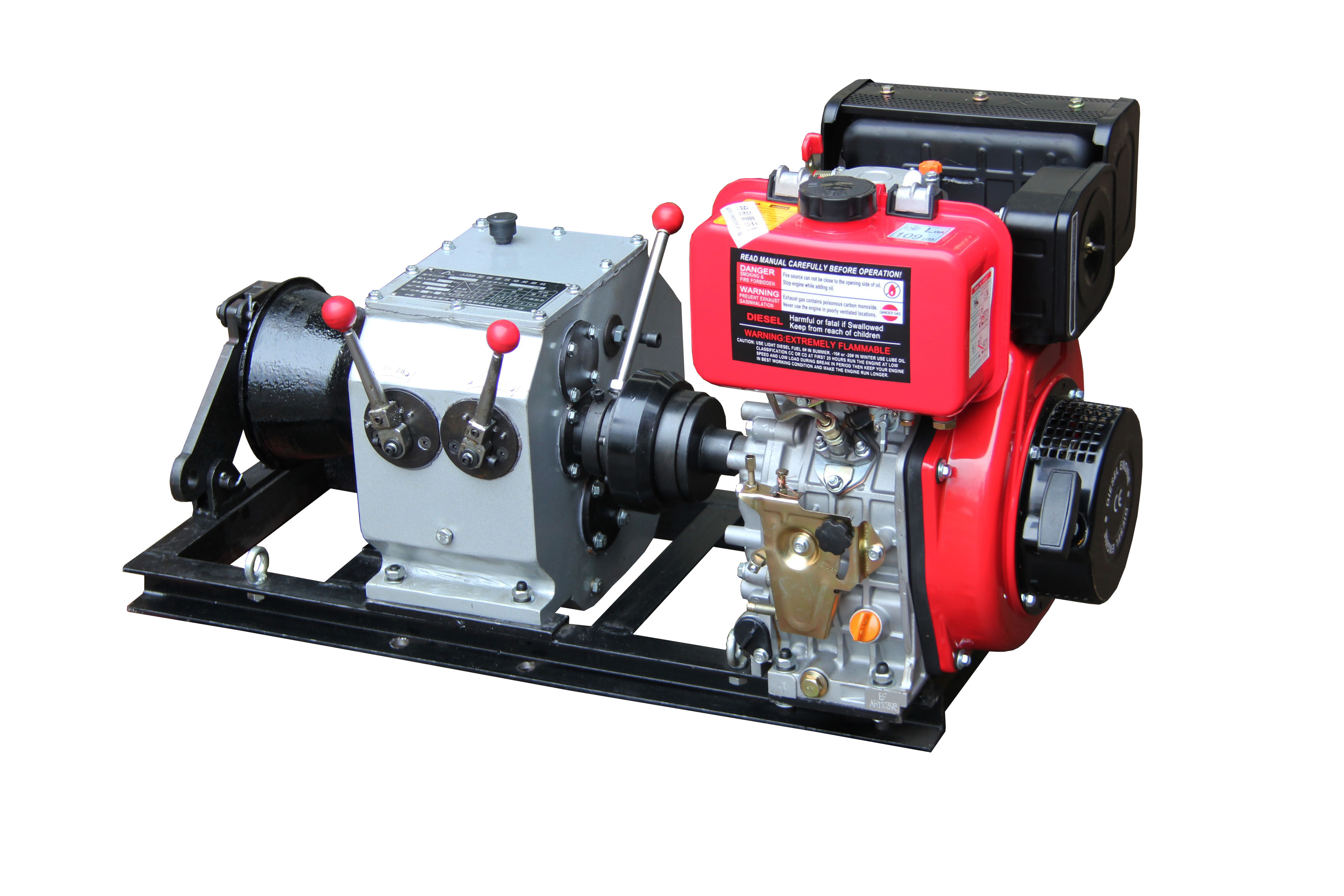
A comprehensive guide to Improving the efficiency of Wire laying trolleys
The wire laying trolley is an important tool in power line construction, mainly used for the laying and pulling of conductors. Its efficiency directly affects the construction progress and project quality. To enhance the efficiency of the wire laying pulley, efforts can be made in aspects such as equipment selection, installation and adjustment, operation optimization, and maintenance. The following will explore in detail how to enhance the working efficiency of the line laying pulley through adjustment and improvement.
---
I. Equipment Selection and Configuration Optimization
1. Select the appropriate type of pulley
There are various types of line laying pulleys, including single-wheel pulleys, multi-wheel pulleys, steering pulleys, etc. Selecting the appropriate pulley based on the construction environment and the type of wire is the foundation for improving efficiency. For example:
Single-wheel pulleys are suitable for the extension of straight sections of conductors. They have a simple structure, are lightweight and easy to handle.
Multi-wheel pulleys are suitable for large-section conductors or large-span construction, which can disperse the tension of the conductors and reduce wear.
The steering pulley is used at the corner of the line and can effectively reduce the friction between the conductor and the pulley.
2. Ensure that the load-bearing capacity of the pulley is matched
The load-bearing capacity of the pulley must match the tension of the wire. If the load-bearing capacity of the pulley is insufficient, it may lead to equipment damage or construction interruption. If the load-bearing capacity is too high, it will increase the weight of the equipment and reduce its efficiency. Therefore, the appropriate load-bearing capacity of the pulley should be selected based on the specifications of the conductors and the construction conditions.
3. Optimize the material and design of the pulleys
The material and design of the pulley directly affect the operating efficiency of the pulley. It is recommended to choose the following optimization schemes:
- Material: Made of high-strength aluminum alloy or composite materials, it not only reduces weight but also enhances wear resistance.
- Design: The surface of the pulley should be smooth and the edges rounded to reduce wire wear and running resistance.
---
Ii. Installation and Adjustment Optimization
1. Arrange the positions of the pulleys reasonably
The layout position of the pulley directly affects the efficiency and safety of the wire extension. The following principles should be followed when arranging:
- Straight section: The spacing of the pulleys should be reasonably determined based on the tension of the conductors, terrain conditions and construction requirements, and is generally controlled between 20 and 30 meters.
- Corner: At the corner, a steering pulley should be installed to ensure a smooth transition of the conductors, reduce wear and tension loss.
- Crossing obstacles: When crossing rivers, roads and other obstacles, the number of pulleys should be appropriately increased to ensure the smooth extension of the conductors.
2. Adjust the height and Angle of the pulley
The height and Angle of the pulley directly affect the operating state of the conductor. When making adjustments, please note:
- Height: The pulley should be installed at the same height as the wire extension path to prevent the wire from having excessive sag or being too tight.
- Angle: The running Angle of the pulley should be consistent with the traction direction of the wire to reduce skew and friction.
3. Ensure that the pulley is securely installed
The stable installation of the pulley is the prerequisite for improving efficiency. When installing, please note:
- Fixing method: Reliable fixing methods such as ground anchors and steel wire ropes should be adopted to ensure that the pulley does not shift during operation.
- Check stability: After installation, the stability of the pulley should be inspected to ensure that it does not shake or tilt during the wire traction process.
---
Iii. Operation Optimization and Personnel Training
Optimize the traction speed
If the traction speed is too fast, it may cause wear of the wires or damage to the pulley; if it is too slow, it will affect the construction efficiency. The traction speed should be reasonably adjusted according to the type of conductor, the load-bearing capacity of the pulley and the construction environment to ensure the safety and efficiency of the construction.
2. Reduce wire wear
Wire wear not only affects the construction quality but also increases the running resistance of the pulley. Wear and tear can be reduced through the following measures:
- Lubricate the pulley: Regularly apply lubricant to the surface of the pulley to reduce friction.
- Avoid cross-friction: During the wire laying process, prevent the wire from cross-friction with the pulley or other obstacles.
3. Strengthen personnel training
The skill level of the operators directly affects the efficiency of the wire laying pulley. Regular training should be conducted, and the contents include:
- Equipment operation: Be familiar with the installation, adjustment and operation methods of the pulley.
- Fault Handling: Master the methods for handling common faults, such as pulley jamming and wire wear.
- Safety awareness: Enhance safety awareness to ensure the safety of personnel and equipment during the construction process.
---
Iv. Maintenance and Fault Prevention
1. Regular inspection and maintenance
Regularly inspect the operating status of the pulley, and promptly identify and solve any problems. The inspection contents include:
- Pulley wear: Check if the surface of the pulley is smooth and if there are any cracks or wear.
- Bearing lubrication: Regularly lubricate the bearings to ensure smooth operation of the trolley.
- Fixtures: Check whether the fixtures are firm and whether there is any looseness or damage.
2. Prevent common malfunctions
Prevent common faults through the following measures:
- Pulley jamming: Regularly clean the dust and debris on the surface of the pulley to keep it clean.
- Wire hopping: Adjust the height and Angle of the pulley to ensure the wire runs smoothly in the pulley groove.
- Equipment damage: Avoid overloading the pulley and replace severely worn parts in a timely manner.
3. Establish maintenance records
Establish maintenance records for the pulley, documenting the situation of each inspection, maintenance and fault handling, to facilitate tracking the equipment status and optimizing the maintenance plan.
---
V. Technological Innovation and Equipment Upgrading
Introduce intelligent equipment
With the development of technology, intelligent line laying trolleys have gradually been applied in construction. For example:
- Automatic pulley adjustment: It can automatically adjust the height and Angle of the pulley according to the tension of the wire, improving operational efficiency.
- Remote monitoring system: Real-time monitoring of the operating status of the pulley, timely detection and handling of problems.
2. Adopt new materials and new processes
Improve the performance of the pulley by adopting new materials and new processes. For example:
- High-strength composite materials: Reduce the weight of the pulley and enhance wear resistance.
- Surface treatment technology: Through special treatment, the smoothness of the pulley surface is enhanced to reduce friction.
---
Conclusion
Through efforts in multiple aspects such as equipment selection, installation and adjustment, operation optimization, maintenance and upkeep, as well as technological innovation, the working efficiency of the line laying trolley can be effectively enhanced. In actual construction, the above-mentioned methods should be flexibly applied based on specific conditions and requirements to ensure the safe, efficient and high-quality completion of the construction. At the same time, continuously keeping an eye on industry trends and technological developments, and constantly optimizing and improving construction techniques, is a long-term strategy to enhance the efficiency of the line laying trolley.