

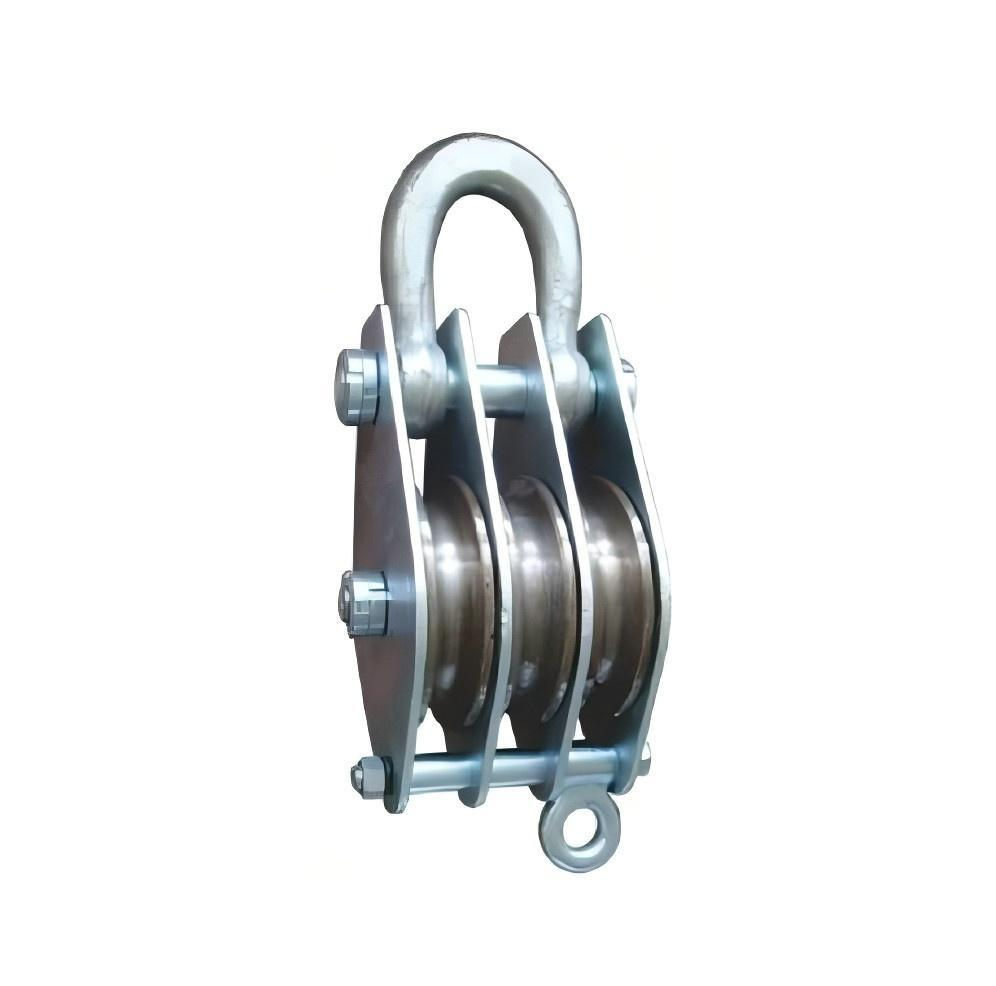
How to correctly choose a crane block
The hoisting iron pulley (also known as the hoisting pulley or hoisting block) is an indispensable piece of equipment in lifting operations and is widely used in construction, manufacturing, logistics, shipping and other fields. It can effectively lift heavy objects, reduce human resource consumption and improve work efficiency. However, due to the wide variety of lifting blocks, choosing the right block is crucial for ensuring the safety and efficiency of the operation. The following will explore in detail from multiple aspects how to correctly select the hoisting iron block.
1. Determine the usage scenarios and requirements
Before choosing a crane block, it is first necessary to clarify its application scenarios and specific requirements. Different working environments have different requirements for pulleys. For example:
Indoor work: Usually, lightweight and easy-to-operate pulleys are required, and the anti-corrosion requirements are relatively low.
- Outdoor operations: The anti-corrosion performance of the pulley needs to be considered, especially in damp, rainy or salt spray environments.
- High or low temperature environment: Materials and designs that can withstand high or low temperatures need to be selected.
- Narrow space: It is necessary to choose a trolley that is small in size and flexible in operation.
In addition, it is necessary to clarify parameters such as the weight, shape, size and lifting height of the lifted object, as these will all affect the selection of the pulley.
2. Select the appropriate type of pulley
Lifting blocks are mainly divided into two categories: fixed pulleys and movable pulleys. Choose the appropriate type according to specific needs
- Fixed pulley: Fixed in one position, mainly used to change the direction of force without reducing the required force. It is suitable for occasions where the direction of the pulling force needs to be changed.
- Movable pulley: It can move and reduce the required force, but it requires a longer rope length. It is suitable for occasions where heavy objects need to be lifted.
In addition, according to the material and structure of the pulleys, pulleys can also be classified into iron pulleys, aluminum alloy pulleys, nylon pulleys, etc. The iron pulley has high strength and is suitable for heavy-duty operations. Aluminum alloy pulleys are lightweight and suitable for occasions with frequent movement. Nylon pulleys have good anti-corrosion performance and are suitable for damp environments.
3. Consider the load-bearing capacity of the pulley
The load-bearing capacity of the pulley is one of the key factors when making a selection. The rated load of the pulley must be greater than or equal to the weight of the actual lifted object to ensure safe operation. Generally, the load-bearing capacity of the pulley is indicated in the product specifications. When choosing, a certain safety margin should be left to avoid overloading.
In addition, the working level of the pulley (such as M4, M5, etc.) also needs to be considered, as it reflects the service life and reliability of the pulley under specific working conditions. The higher the working level, the better the durability and safety of the pulley.
4. The size and weight of the pulley
The size and weight of the pulley directly affect its convenience of use. For situations that require frequent movement or high-altitude operations, lightweight and compact pulleys should be selected to reduce the burden on operators. For lifting operations at fixed positions, larger-sized pulleys can be selected to enhance stability and load-bearing capacity.
5. The ropes or chains of the pulley are matched
Pulleys are usually used in conjunction with steel wire ropes, chains or other lifting ropes. When choosing a pulley, it is necessary to ensure that it matches the rope or chain to be used. Specifically including:
- Rope diameter: The pulley groove of the pulley should match the rope diameter to prevent rope wear or slippage.
- Chain specification: If a chain is used, the chain groove of the pulley should be consistent with the chain specification to ensure smooth operation of the chain.
- Rope material: Select the appropriate rope material based on the working environment, such as steel wire rope, nylon rope, etc.
6. Safety devices of the pulley
Modern hoisting blocks are usually equipped with a variety of safety devices to enhance the safety of operations. Common safety devices include:
- Anti-rope disengagement device: Prevents the rope from coming out of the pulley groove, reducing the risk of accidents.
- Limiter: Restricts the movement range of the pulley to prevent overloading or over-limit use.
- Self-locking device: Automatically locks the pulley when the operation stops to prevent the heavy object from accidentally falling.
When choosing a pulley, one should select a pulley equipped with appropriate safety devices based on the safety requirements of the operation.
7. Maintenance and upkeep of the pulley
The hoisting block needs regular maintenance and care during use to ensure its long-term reliable operation. When choosing a pulley, the convenience of its maintenance should be taken into consideration, for example:
- Easy to disassemble design: Facilitates inspection and replacement of components.
- Anti-corrosion treatment: Extend the service life of the pulley in harsh environments.
- Lubrication system: Ensures smooth operation of the pulley and reduces wear.
8. Brand and after-sales service
Choosing a well-known brand of hoisting block usually ensures higher quality and reliability. In addition, good after-sales service is also a factor to be considered when choosing a pulley, including technical support, maintenance services, spare parts supply, etc.
9. Cost-benefit analysis
Under the premise of meeting the usage requirements and safety standards, choose a pulley with high cost performance. One should not merely pursue low prices while neglecting quality and safety. At the same time, factors such as the service life of the pulley and maintenance costs should be comprehensively considered to conduct a comprehensive cost-benefit analysis.
Conclusion
The correct selection of a crane trolley requires a comprehensive consideration of multiple factors, including the usage scenario, trolley type, load-bearing capacity, size and weight, rope matching, safety devices, maintenance and upkeep, brand after-sales service, and cost-effectiveness. Only by fully understanding one's own needs and choosing the appropriate pulley can the safety, efficiency and reliability of lifting operations be ensured.
Lifting Equipment, wrenches, Wrench