

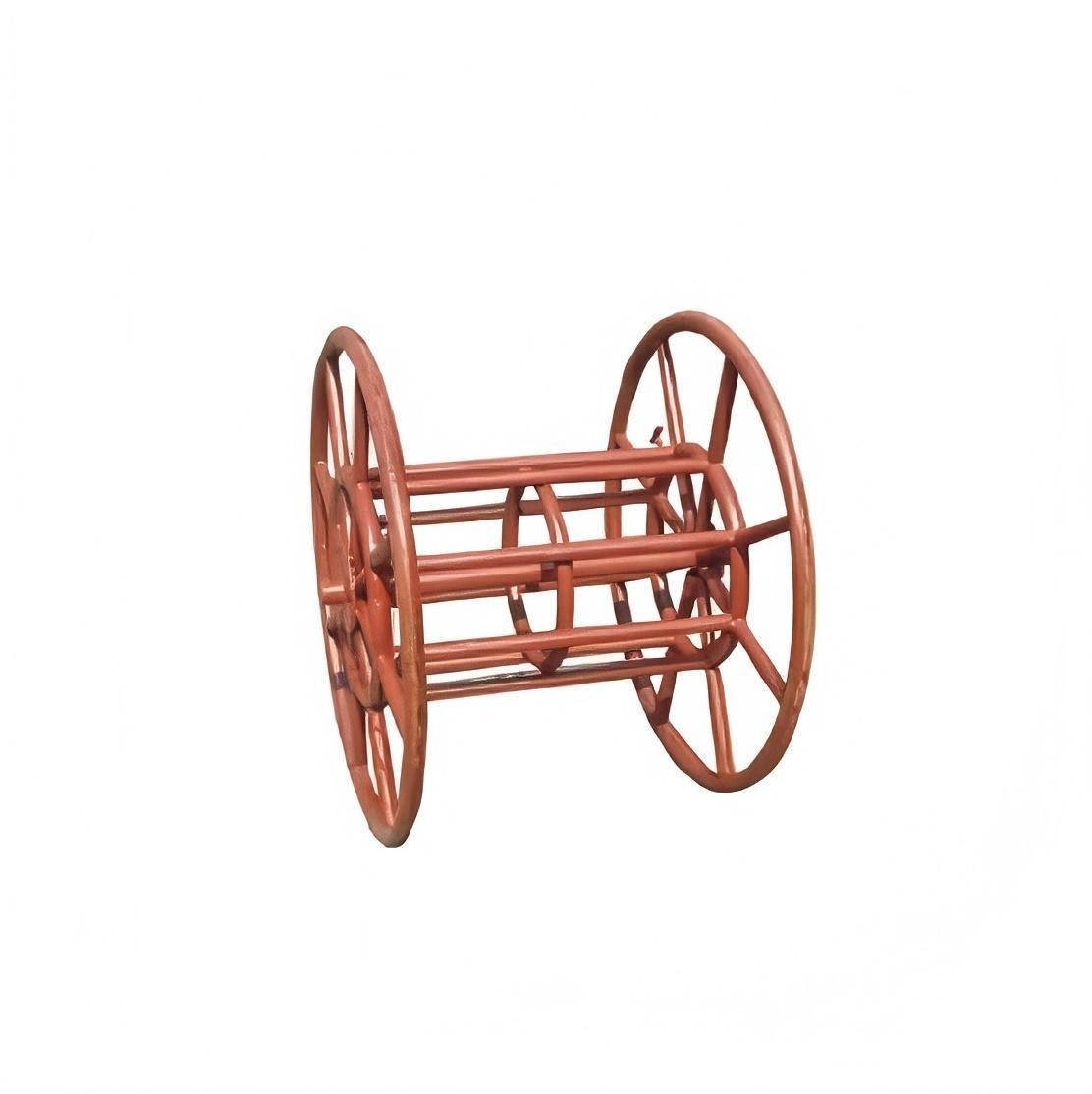
The transportation methods and precautions of the line laying trolley
The wire laying trolley is a commonly used tool in industries such as power, communication, and construction, mainly used for laying cables, conductors, and other operations. Due to its large size, heavy weight and complex structure, special attention needs to be paid to safety and convenience during transportation. The following will provide a detailed introduction to the transportation methods and precautions of the line laying trolley to help users complete the transportation tasks more efficiently and safely.
---
I. Preparations Before Transportation
1. Choose the appropriate means of transportation
- Vehicle selection: Choose the appropriate transport vehicle based on the size and weight of the line-laying pulley. Generally speaking, small and medium-sized line laying trolleys can be transported by pickup trucks or small trucks, while large line laying trolleys need to be transported by flatbed trucks or heavy-duty trucks.
- Vehicle inspection: Ensure that the braking, tire, lighting and other systems of the transport vehicle are in good condition to prevent accidents during transportation.
2. Check the condition of the wire laying pulley
- Visual inspection: Confirm that the appearance of the line laying pulley is undamaged, especially whether the key components such as pulleys and brackets are intact.
- Function check: Ensure that the mechanical components of the wire laying pulley can operate normally to avoid affecting its use due to faults after transportation.
3. Prepare the fixing tools
- Straps or ropes: Prepare a sufficient quantity of high-strength straps or ropes to secure the wire laying trolley.
Anti-slip MATS: Place anti-slip MATS at the contact points between the vehicle and the line laying trolley to prevent sliding during transportation.
- Protective materials: Wrap the vulnerable parts of the wire laying trolley with materials such as foam and blankets to prevent bumps and knocks during transportation.
---
Ii. Loading Method of the line laying trolley
1. Plan the loading position reasonably
- Center of gravity balance: Place the line-laying pulley at the center of the vehicle to ensure even weight distribution in all directions of the vehicle, avoiding uneven loading.
- Fixed position: Choose a stable position on the vehicle for fixation to prevent the vehicle from shifting due to jolts during driving.
2. Fix the wire laying pulley
- Strap fixation: Use high-strength straps to fix the line laying trolley to the vehicle. The straps should be cross-fixed to ensure that the trolley does not move forward, backward, left or right.
- Rope reinforcement: On the basis of being fixed with straps, further reinforcement is carried out using ropes, especially during long-distance transportation or in poor road conditions.
- Check the fixation effect: After fixation, shake the wire laying pulley by hand to confirm its stability.
3. Protect vulnerable parts
- Pulley protection: Wrap the pulleys with protective materials to prevent them from being impacted or worn during transportation.
- Support protection: Wrap the sharp parts of the support to prevent scratches on vehicles or personnel during transportation.
---
Iii. Precautions during Transportation
1. Control the vehicle speed
- Smooth driving: During transportation, maintain a constant speed, avoid sudden acceleration, sudden braking or sharp turns, and prevent the line release trolley from shifting due to inertia.
- Road condition selection: Try to drive on flat and wide roads and avoid bumpy or narrow sections.
2. Regular inspection
- Mid-journey inspection: During long-distance transportation, stop the vehicle at regular intervals to check the fixation of the line release pulley, ensuring that the straps and ropes are not loose.
- Abnormal handling: If loose fixation or displacement of the pulley is detected, the machine should be stopped immediately and re-fixed.
3. Weather factors
- Rain protection: When transporting in rainy weather, cover the wire laying trolley with a waterproof cloth to prevent rust or damage caused by rainwater erosion.
- Strong wind weather: When transporting in strong wind weather, special attention should be paid to the stability of the trolley. If necessary, additional fixing measures should be taken.
---
Iv. Unloading and Storage
Unloading method
- Use auxiliary tools: When unloading, forklifts, cranes and other equipment can be used to avoid accidents caused by manual handling.
- Stable placement: Place the wire laying pulley steadily on the ground or at the designated position, avoiding violent impacts.
2. Storage requirements
- Dry environment: Store the wire laying trolley in a dry and well-ventilated place to prevent rusting caused by moisture.
- Regular maintenance: When stored for a long time, regularly inspect the condition of the pulley and lubricate and maintain the key components.
---
V. Summary
The transportation of line laying trolleys requires a comprehensive consideration of multiple factors such as vehicle selection, fixation methods, and transportation road conditions. Through reasonable preparation and operation, the transportation efficiency can be effectively improved, and at the same time, it can be ensured that the trolley is not damaged during transportation. In actual operation, it is essential to strictly follow safety regulations to avoid accidents caused by negligence. Through the above methods, users can complete the transportation tasks of the line laying trolley more conveniently and safely.