

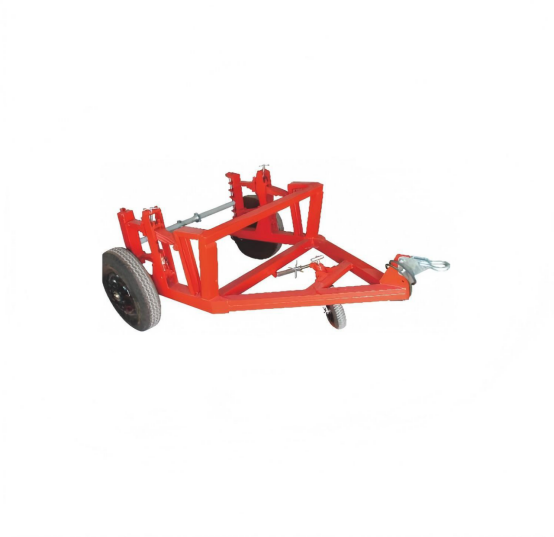
The crane trolley is an indispensable and important equipment in lifting operations and is widely used in construction, manufacturing, logistics and other fields. To ensure its safe and efficient operation and extend its service life, regular maintenance and upkeep are of vital importance. The following is a detailed guide for the maintenance and upkeep of crane block cars.
I. Daily Inspection
1. Visual inspection
Before each use, the appearance of the pulley should be inspected for cracks, deformations, corrosion or other damages. Special attention should be paid to key parts such as pulleys, bearings and hooks.
Check whether the connecting parts of the pulley, such as bolts and nuts, are loose or missing, and ensure that all parts are in a tight state.
2. Lubrication inspection
Regularly check the lubrication condition of the pulley to ensure that the pulleys, bearings and other moving parts have sufficient lubrication. Insufficient lubrication can lead to increased friction and accelerate wear.
Use appropriate lubricants and avoid using inferior or unsuitable ones to prevent damage to the equipment.
3. Inspection of pulleys and bearings
Check whether the pulley rotates smoothly and whether there is any jamming or abnormal noise. If the pulley does not rotate smoothly, it may be a sign of bearing damage or insufficient lubrication.
Check if the bearings are worn or damaged and replace them if necessary.
4. Inspection of steel wire ropes
Check whether the steel wire rope has broken wires, wear, deformation or corrosion. Steel wire ropes are key components in lifting operations. Once damage is found, they should be replaced immediately.
Ensure that the steel wire rope is wound correctly on the pulley to avoid crossing or misalignment.
5. Hook inspection
Check if the hook has any cracks, deformations or wear. Hooks are components that directly carry heavy objects. Any damage to them may lead to serious safety accidents.
Check whether the safety device of the hook is in good condition to ensure that it will not accidentally come off during the lifting process.
Second, regular maintenance
1. Cleaning and maintenance
Regularly clean the pulley to remove dust, oil stains and other debris. When cleaning, you can use a soft cloth and neutral detergent. Avoid using highly corrosive chemicals.
After cleaning, the pulley should be thoroughly dried to prevent rust caused by residual moisture.
2. Lubrication and maintenance
Formulate a lubrication plan based on the usage frequency and working environment. Under normal circumstances, a comprehensive lubrication maintenance should be carried out once a month.
When lubricating, suitable lubricants should be used and it should be ensured that the lubricants are evenly distributed on moving parts such as pulleys and bearings.
For pulleys that are not used for a long time, they should be fully lubricated before storage to prevent the components from rusting or getting stuck.
3. Fastener inspection
Regularly inspect all the fasteners on the pulley, such as bolts and nuts, to ensure they are in a tight condition. Loose fasteners may cause unstable operation of equipment and even lead to safety accidents.
For loose fasteners found, they should be tightened or replaced immediately.
4. Bearing replacement
Bearings are key components of pulleys and may wear out or get damaged after long-term use. Regularly inspect the operation of the bearings and replace them if necessary.
When replacing bearings, products of the same specification and model as the original ones should be selected to ensure their performance matches.
5. Steel wire rope replacement
Steel wire ropes are vulnerable parts in lifting operations. Regularly check their wear and tear and replace them when necessary. Under normal circumstances, the service life of steel wire ropes is 1 to 2 years, which depends on the frequency of use and the working environment.
When replacing the steel wire rope, products that meet national standards should be selected and installed strictly in accordance with the operating procedures.
Iii. Storage and Transportation
1. Storage environment
The pulley should be stored in a dry and well-ventilated environment, avoiding the influence of moisture, high temperature or corrosive gases.
When stored for a long time, the condition of the pulley should be inspected regularly and necessary maintenance should be carried out, such as lubrication and cleaning.
2. Transportation protection
When transporting trolleys, appropriate protective measures should be taken to prevent collision, vibration or compression. Foam, wooden crates and other materials can be used for packaging to ensure that the trolley is not damaged during transportation.
During transportation, it is necessary to avoid the trolley coming into contact with other heavy or sharp objects to prevent scratches or deformation.
Iv. Safety Precautions for Use
1. Operating norms
When operating the pulley, strictly follow the operating procedures and avoid improper operations such as overloading, oblique pulling or sudden stopping.
Operators should undergo professional training and be familiar with the structure, performance and safety requirements of the pulley.
2. Load limitation
When using a pulley, strictly follow its rated load limit to avoid overloading. Overloading can cause deformation and damage to the pulley, and even lead to safety accidents.
For hoists of different specifications, the appropriate lifting task should be selected based on their rated load.
3. Regular testing
Regularly conduct professional inspections on the pulley to ensure that its performance meets safety standards. The inspection contents include the structural integrity, operating status, load capacity, etc. of the pulley.
For the problems found during the inspection, timely maintenance or replacement should be carried out to ensure the safe use of the pulley.
V. Summary
The maintenance and upkeep of crane trolleys are the key to ensuring their safe and efficient operation. Through daily inspection, regular maintenance, proper storage and standardized operation, the service life of the pulley can be effectively prolonged, the occurrence rate of faults can be reduced, and the safety and efficiency of lifting operations can be guaranteed. Operators should possess the corresponding professional knowledge and skills, strictly follow the operating procedures for work, and ensure that the pulley is always in good working condition.
Lifting Equipment, wrenches, Wrench